Glaucoma - bluish cataract
Glaucoma is a slowly and imperceptibly progressive optic neuropathy, usually associated with chronic increase in intraocular pressure. It is the main cause of blindness in black Americans. Causes damage to the optic nerve with increased intraocular pressure is not installed. The first damaged axons in nizhnevisochnoy part of the optic disk and verhnevisochnoy part of the optic disk, with the first formed the characteristic defects of the retina nerve fiber layer, and then a arcuate scotoma. As the destruction of nerve fibers neyroglialnoe ring optic disc narrows and physiological disc excavation increases; appears the so-called glaucomatous excavation.
The ratio of the diameter of excavation to the diameter of the disc represent as a fraction, for example 0,2 / 1. Normally, this ratio can vary significantly, it is difficult to reliably diagnose glaucoma on the basis of only one unusually large or deep excavation. In such cases, replication studies are useful: people with physiological excavation deeper dimensions do not change, whereas in glaucoma, they steadily increased over time.
An important role in the diagnosis of playing the perimeter. Finally, in most cases, increased intraocular pressure. However, many patients with typical glaucomatous excavation of fields and a violation of intraocular pressure, apparently, has never exceeded the normal level of 20 mm Hg. Art. (So-called normotensive glaucoma).
Attacks of angle-closure glaucoma observed only a small number of patients.
Most patients suffer from open angle glaucoma, in which there is no blockade iridocorneal angle. In such cases, the cause of increased intraocular pressure is unknown. This pressure increase is slower and less pronounced than in the closure form, so there is pain and hyperemia of the eye. The central field of vision and visual acuity to 1.0 can be preserved until the terminal stages of glaucoma. Thus, even severe irreversible damage to the optic nerve may go unnoticed to the sick and the doctor. Therefore, it is necessary to conduct mass screening for glaucoma with the mandatory ophthalmoscopy, the definition of the diameter of the excavation to the diameter of the disk and measurement of intraocular pressure (using tonometers Shiottsa, Goldman or Tonopah).
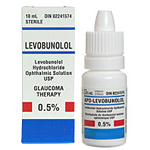
Glaucoma treat instillation of alpha-adrenostimulyatorov (adrenaline, dipivefrina, apraklonidina), M-holinostimulyatorov (pilocarpine) and beta-blockers (betaxolol, karteolola, levobunolol, metipranolol and timolola).
Even if the local application of beta-blockers can have systemic effects, enough to sometimes cause side effects such as bradycardia, hypotension, AV block, bronchospasm, impotence or depression.
In order to reduce intraocular pressure as carbonic anhydrase inhibitors are used topically or orally, inhibiting the formation of aqueous humor. Laser coagulation of the trabeculae the anterior chamber angle improves the outflow of aqueous humor.
In the absence of sufficient hypotensive effect of the drug and laser treatment underwent surgical intervention of the filter type (trabekulektomiyu).
Abnormally high IOP causes glaucoma, which leads to blindness. Intraocular pressure (IOP) has a daily rate - the highest IOP in the morning and the minimum - in the evening. Abnormally high DG (glaucoma) usually occurs as a result of violations of absorption in the filter corner. When okrytom filtration angle, a rare variant of glaucoma associated with increased production of aqueous humor in the outgrowths of the ciliary body.